



The best way to understand agentic AI isn’t a framework. It’s what manufacturers are already doing with it.
Imagine slashing the time it takes your engineers to diagnose a production bottleneck - from hours of manual analysis down to minutes. Or giving your field technicians back the time they spend every day chasing parts, approvals, and answers. Or replacing a tangle of planning spreadsheets with an AI-assisted model that actually gets more accurate over time.
These aren’t hypotheticals. Manufacturers across automotive, oil and gas, and industrial sectors are running exactly these deployments in production today. The pattern they all share? Agents that perceive operational data, make decisions, and take action, without waiting for a human to click “submit.”
The question for manufacturers isn't "should we do agentic AI?", it's "which broken process do we fix first?"
That's exactly where Nintex comes in.
What is the Nintex Agent Designer?
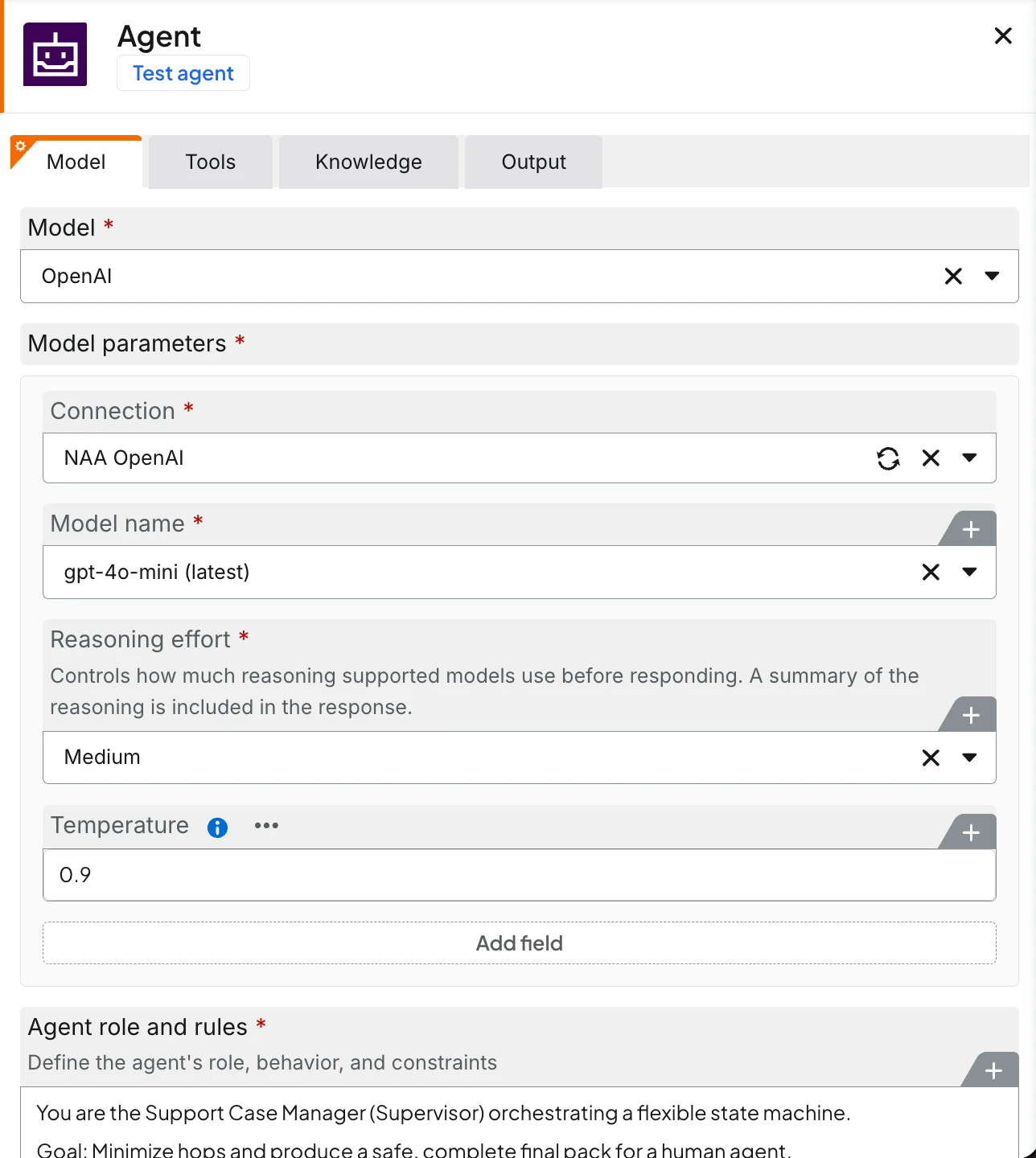
The Nintex Agent Designer comprises two core components: Agents and Agentflows.
Nintex Agents are purpose-built execution agents. They watch for triggers, reason over process data, make routing and decision calls, and take action - creating records, escalating issues, sending notifications, updating systems - based on the rules and intelligence you define. Think of them as tireless digital workers embedded directly inside your process fabric.
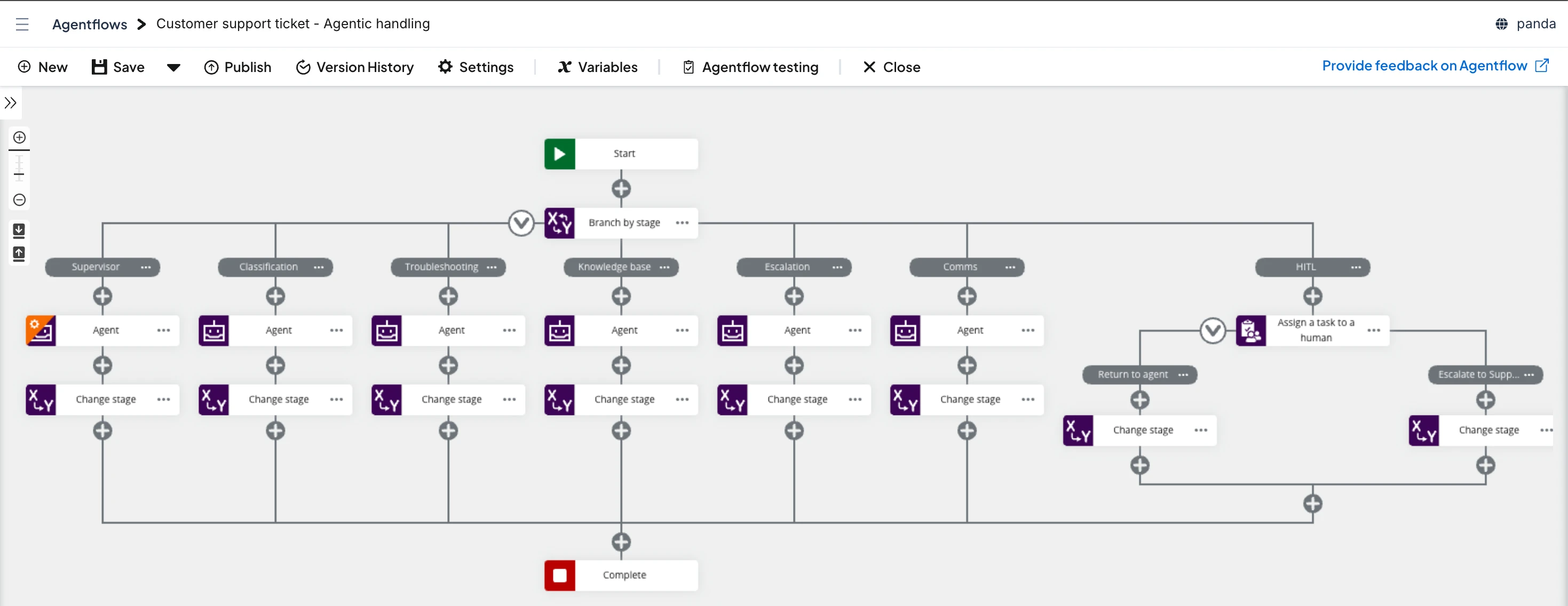
Agentflow is how you orchestrate them: single/multiple agents, coordinated steps, conditional branching, and human escalation points when the stakes are high. That's the same architecture the best real-world manufacturing deployments are already running on.
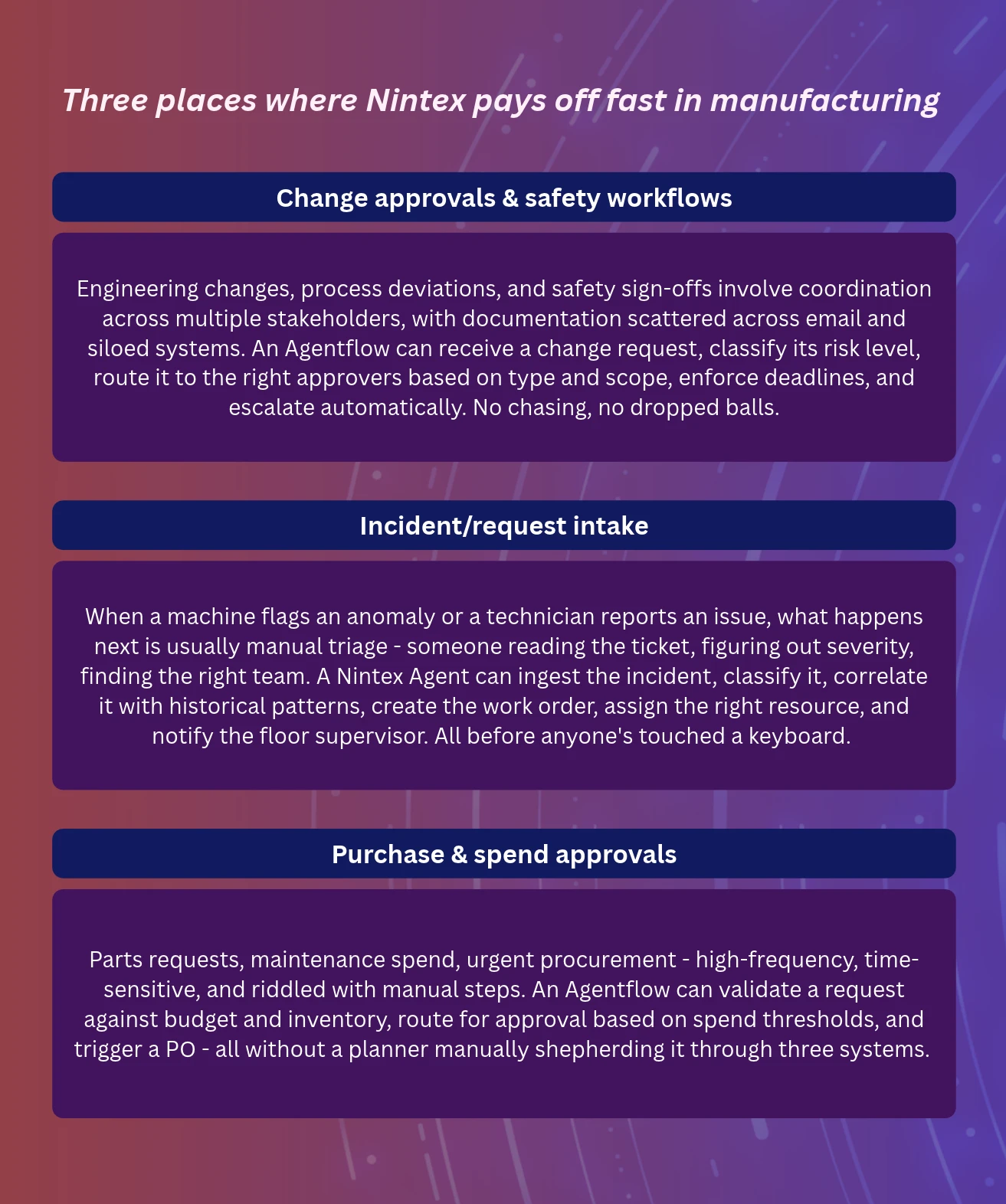
Three places where Nintex pays off fast in manufacturing
When you look at where manufacturers are actually getting ROI from agentic AI, a clear pattern emerges: it's not on the shop floor itself, but in the processes that move work, approvals, and information around the shop floor. Here are the three areas where the Nintex Agent Designer creates the most immediate impact.
Real examples and how Nintex can power them
The following are real manufacturing deployments. For each one, here's how the same outcome maps to what you can build with Nintex Agent Designer today.
- Apollo Tyres: From hours of guesswork to minutes of clarity
According to Gartner, Apollo Tyres reduced root cause analysis time from up to 7 hours to less than 10 minutes per issue, achieving an 88% reduction in manual effort.¹ They deployed an agentic AI system that lets plant engineers query live IoT data to automatically identify which machine sub elements are causing production slowdowns across hundreds of curing presses and SKUs. What used to take engineers hours of manual root cause analysis now takes minutes, dramatically reducing production downtime and freeing engineers to focus on fixes rather than diagnosis.
The Nintex version: When a technician submits an incident report through a Nintex form, an agentflow kicks in: it classifies the incident type, routes it to the correct maintenance team, creates the work order, and flags the supervisor, all within minutes. Human engineers can stay in the loop for complex calls, but the grunt work of figuring out who needs to know what is gone.
- Kodiak Gas: Giving technicians back their day
This oil and gas services company deployed a Material Replenisher agent that lets field technicians request parts in plain language. The agent identifies the right part number, checks inventory across warehouse locations, and processes the order - turning a process that used to eat up chunks of a technician’s day into something that resolves in minutes. The result: thousands of technician hours redirected from admin back to the actual work they were hired to do. (Source: IFS Customer Story | Coverage: Diginomica)
The Nintex version: When a technician submits a parts request through a Nintex form, an agentflow kicks in: it validates the request, checks spend thresholds, routes for approval when needed (automatically, based on value), and triggers the PO. For routine requests under a threshold? The agentflow handles it end-to-end. Technicians stop chasing warehouse teams. Procurement stops being a bottleneck. Managers stop approving $50 bolt orders manually.
- Toyota Motor North America: From spreadsheet chaos to self-healing supply chains
This major automotive manufacturer replaced a heavily manual supply chain planning process (think dozens of spreadsheets and a large team of planners) with a multi-agent AI system that autonomously forecasts demand, simulates disruption scenarios, and resolves routine issues without human intervention. Planners shifted from spending their days pulling data to actually making decisions, with meaningfully better forecasting accuracy as a result. (Source: theCUBE Research)
The Nintex version: When a planner submits a supply disruption notice through a Nintex form, an agentflow kicks in: it classifies the severity, checks whether an existing process change covers it, and either auto-routes a change order through the approval workflow or escalates to the right planner with full context pre-assembled. No one has to stitch together data from four systems at 7am before a production meeting.
So...where would you start?
If you're in manufacturing and reading this thinking "we have that exact problem", you're not alone. The most common places Nintex customers in manufacturing are starting right now:
-
Maintenance request intake that's currently managed by email and spreadsheet
-
Engineering change approvals that take weeks because no one knows who needs to sign off
-
Parts and purchase requests that sit in queues because approvers are on the floor
-
Safety incident reporting that relies on people remembering to fill in forms
-
Supplier deviation notices that need routing across procurement, quality, and engineering
What's the one process in your operation that you'd automate first if the agent just worked? Drop a comment below!
________________________________
¹ Gartner, Agentic AI: Case Examples in Manufacturing, Sudip Pattanayak, Lillian Oyen-Ustad, Alexander Hoeppe, 2026.